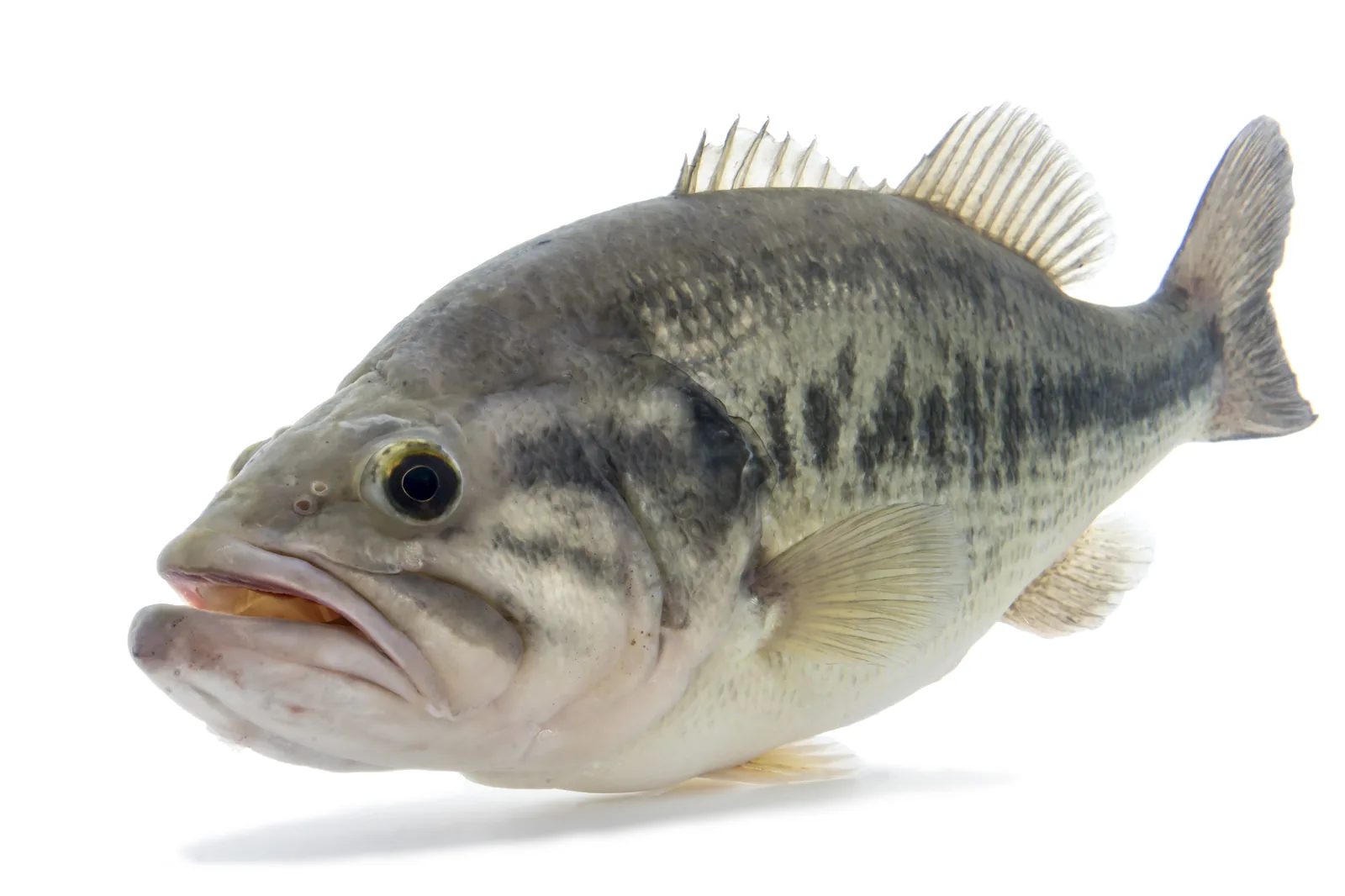
The anal fin is the whole argument
Both fish are built the same way: slender body, deeply forked tail, barbels around the mouth. Colour and body shape will not separate them reliably, so start with the fin that runs along the belly, just ahead of the tail.
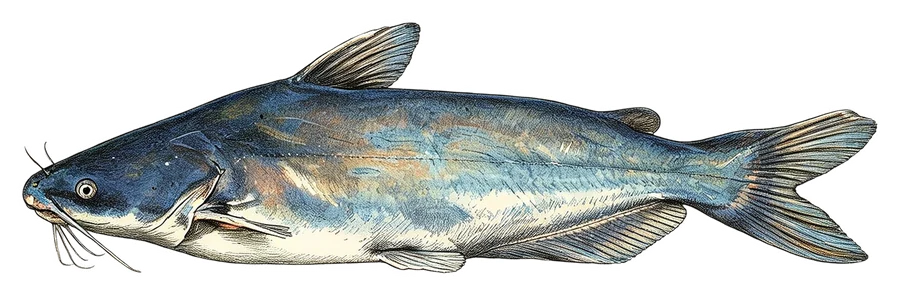
On a channel catfish that fin has a rounded outer edge and 24–29 rays. On a blue catfish the edge is straight, like a ruler, and the count runs 30–36. The two ranges barely meet, which is why the fin is the feature worth photographing.
| Feature | Channel catfish | Blue catfish |
|---|---|---|
| Anal fin outer margin | Rounded, curved edge | Straight, ruler-like edge |
| Anal fin rays | 24–29 | 30–36 |
| Dark spots on body | Often present when young, may fade with size | Usually absent; Rio Grande fish can show spots |
| Tail | Deeply forked | Deeply forked |
Channel catfish: what you are looking at
Ictalurus punctatus — the common catfish of rivers, reservoirs and ponds across the United States.
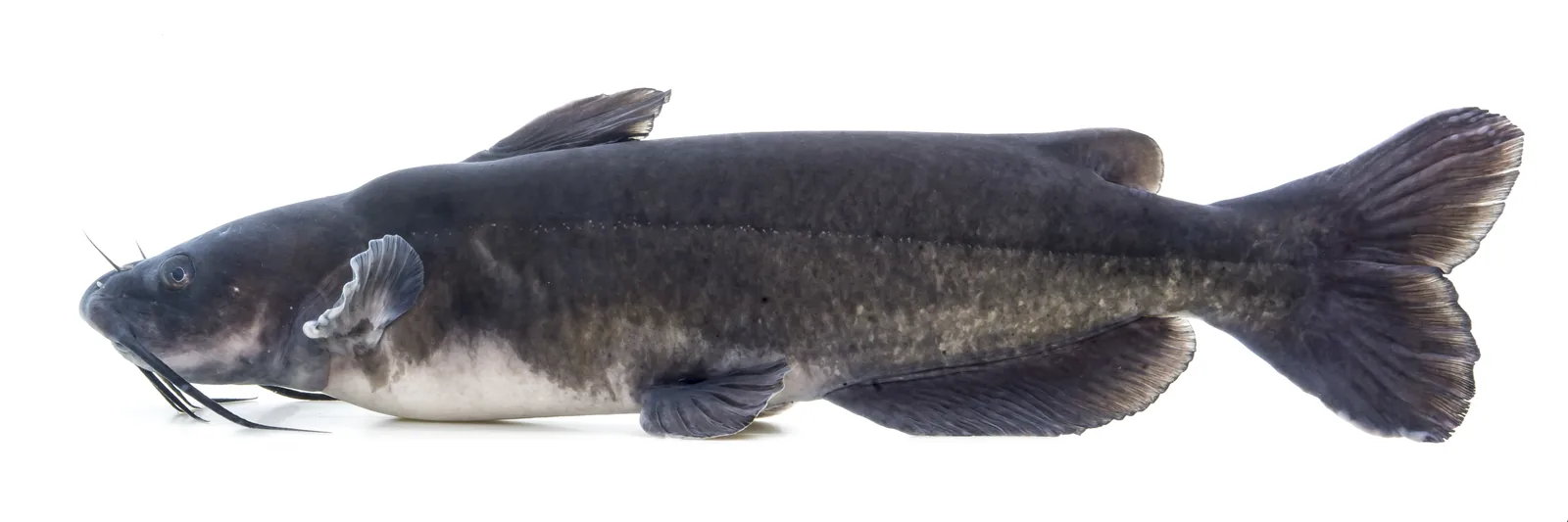
- Anal fin. Rounded outer edge on a short base, 24–29 rays. Spread it flat and the outline curves like a thumbnail.
- Body markings. Small dark spots scattered along the side, clearest on young fish and sometimes gone on old ones.
- Colour. Grey-blue to olive above, pale belly — useful as a hint, not as proof.
- Tail. Deeply forked, exactly like a blue catfish, so it decides nothing on its own.
Blue catfish: what you are looking at
Ictalurus furcatus — the bigger, plainer cousin, at home in large rivers and reservoirs.
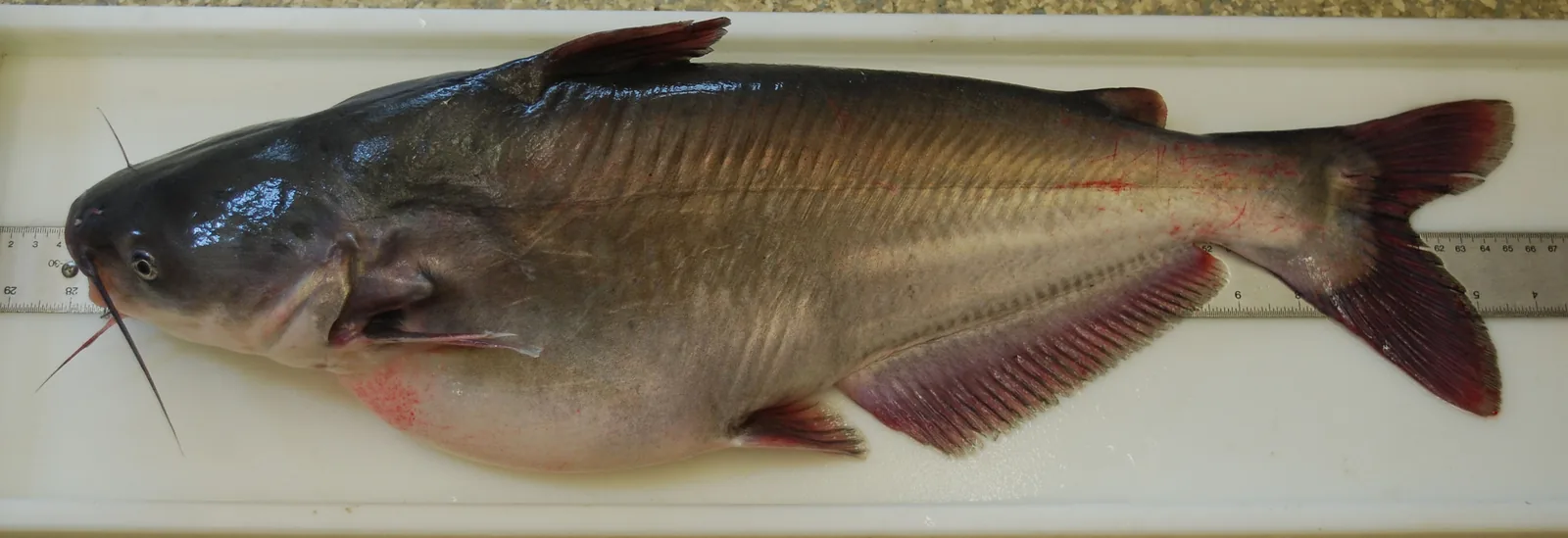
- Anal fin. Straight outer edge on a base longer than the channel catfish's, 30–36 rays.
- Body markings. Normally plain, with no dark spots; the Rio Grande population is the exception and can be spotted.
- Colour. Slate blue-grey above, white belly; larger fish often look almost uniformly dark.
- Tail. Deeply forked, same as the channel catfish.
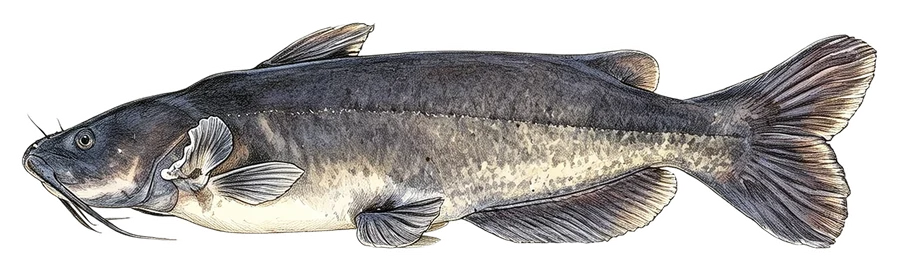
The two fin edges, side by side
Once the fish is on its side, the difference is not subtle. Compare the curve against the straight edge before you start counting rays.
Checking it with the fish in your hand
Lay the fish on its side and spread the anal fin flat against a plain surface. Read the outline first — a curve or a straight edge — then count the stiff rays front to back if you want the confirmation. The shape is fast at a glance; the count is what makes it certain.
Photograph it so the answer is visible
Any identification, human or model, only works with what is in the frame. For these two, the photo has to answer one question clearly.
- The whole fish, side-on. Head and tail both in frame, body roughly parallel to the camera, not angled away.
- The anal fin flat and in focus. A folded fin or a shadow across the belly hides the only feature that separates the two.
- Daylight, no direct flash. Wet skin throws glare that flattens the fin edge.
- A plain background. Deck, grass or a hand behind the fish keeps the outline readable.
- A second frame of the fin. A close-up of the anal fin is worth carrying alongside the full-body shot.
Where AI helps, and where it stops
Catchdex returns three candidates with a confidence level and the traits behind each one, so you compare rather than simply accept the top result. That is useful when the fish is in front of you and the fin is visible; it is not a substitute for looking.
Treat the suggestion as a starting point. Confirm the fish yourself, and check current rules with your state or provincial wildlife agency before you keep anything — regulations differ by water, by season and by species, and they change.
Identify your next catch
Photograph the fish, compare the leading candidates, and keep the ones you confirm in your own field guide.
Download for iPhoneSources
- Texas Parks & Wildlife Department — Catfish Comparison and Identification (anal fin shape and ray counts).
- Texas Parks & Wildlife Department — Channel Catfish (Ictalurus punctatus).
- Texas Parks & Wildlife Department — Blue Catfish (Ictalurus furcatus).
Photographs are used under their original licences and credited in the captions. Illustrations are original Catchdex artwork. This page is general identification guidance, not fishing or food advice; always follow the rules published by the agency that manages the water you are on.