One landmark: where the jaw ends
Put the fish side-on and trace the upper jaw from the snout back to its hinge. On a largemouth bass the jaw runs well past the rear margin of the eye. On a smallmouth bass it stops level with the eye, or short of it. The test works on fish of any size, which is why it comes first.
The flank is the second check: a largemouth carries dark blotches strung together into a horizontal stripe, while a smallmouth carries dark vertical bands. The dorsal fin splits the difference a third time — nearly divided on a largemouth, with the front section carrying nine spines and the rear 12–13 soft rays; a smallmouth’s dorsal fin carries 13–15 soft rays.
| Feature | Largemouth bass | Smallmouth bass |
|---|---|---|
| Upper jaw vs eye | Extends well past the rear margin of the eye | Ends level with, or before, the eye |
| Flank pattern | Dark blotches forming a horizontal stripe | Dark vertical bands |
| Dorsal fin | Nearly divided: 9 spines, then 12–13 soft rays | 13–15 soft rays |
| Body colour | Green above, pale underside | Green, often bronze-tinged |
Largemouth bass: what you are looking at
Micropterus salmoides — the bass of warm, weedy water, from farm ponds to big reservoirs.
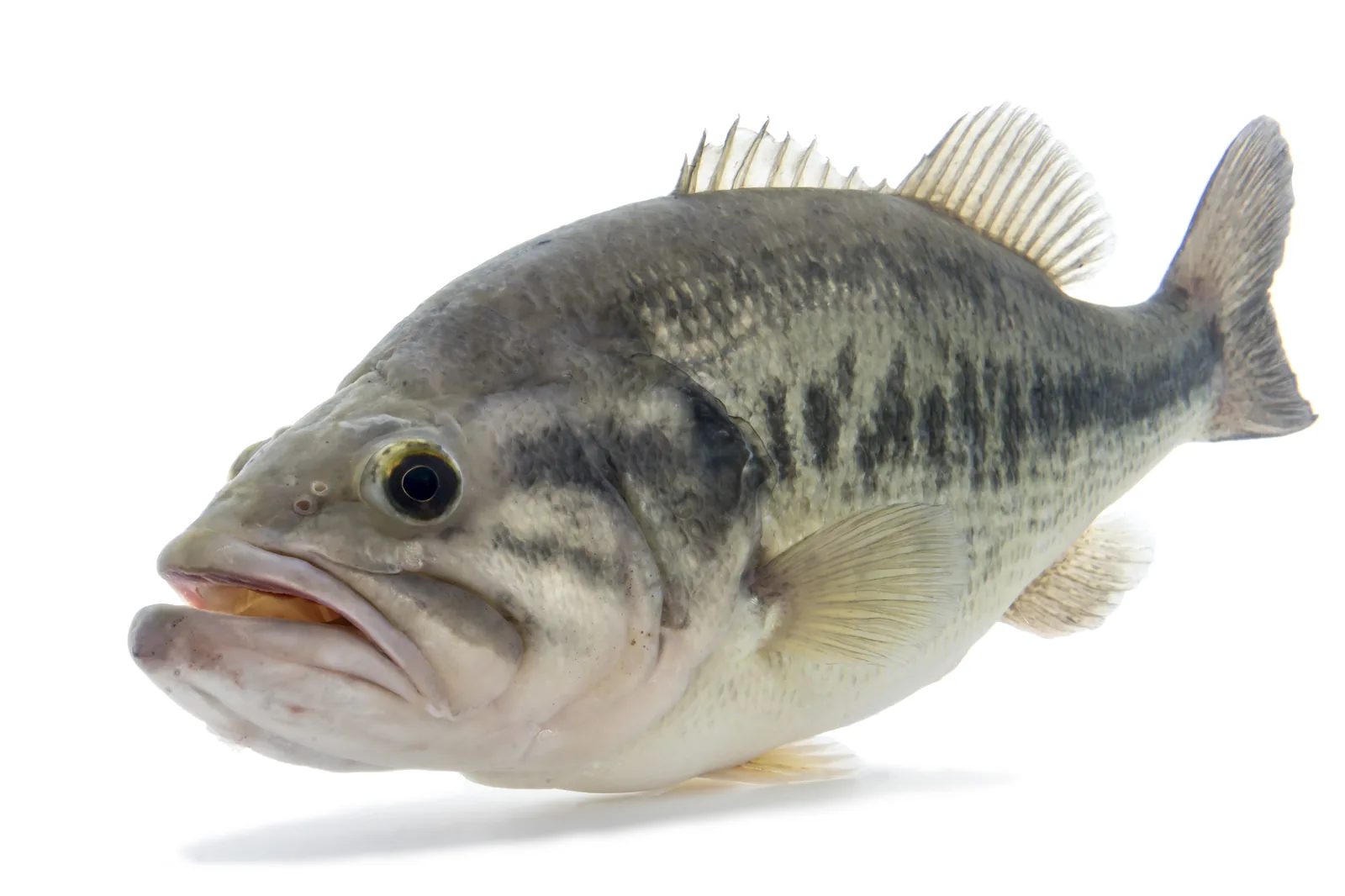
- Jaw. The upper jaw extends well past the rear margin of the eye — the single most reliable check.
- Flank. Dark blotches sit in a row along the middle of the side, reading as one broken horizontal stripe.
- Dorsal fin. Nearly divided into two sections: nine spines in front, 12–13 soft rays behind.
- Colour. Green above with a pale underside — a hint only, since light and water change it.
Smallmouth bass: what you are looking at
Micropterus dolomieu — the bass of cool, clear rivers and rocky lakes.
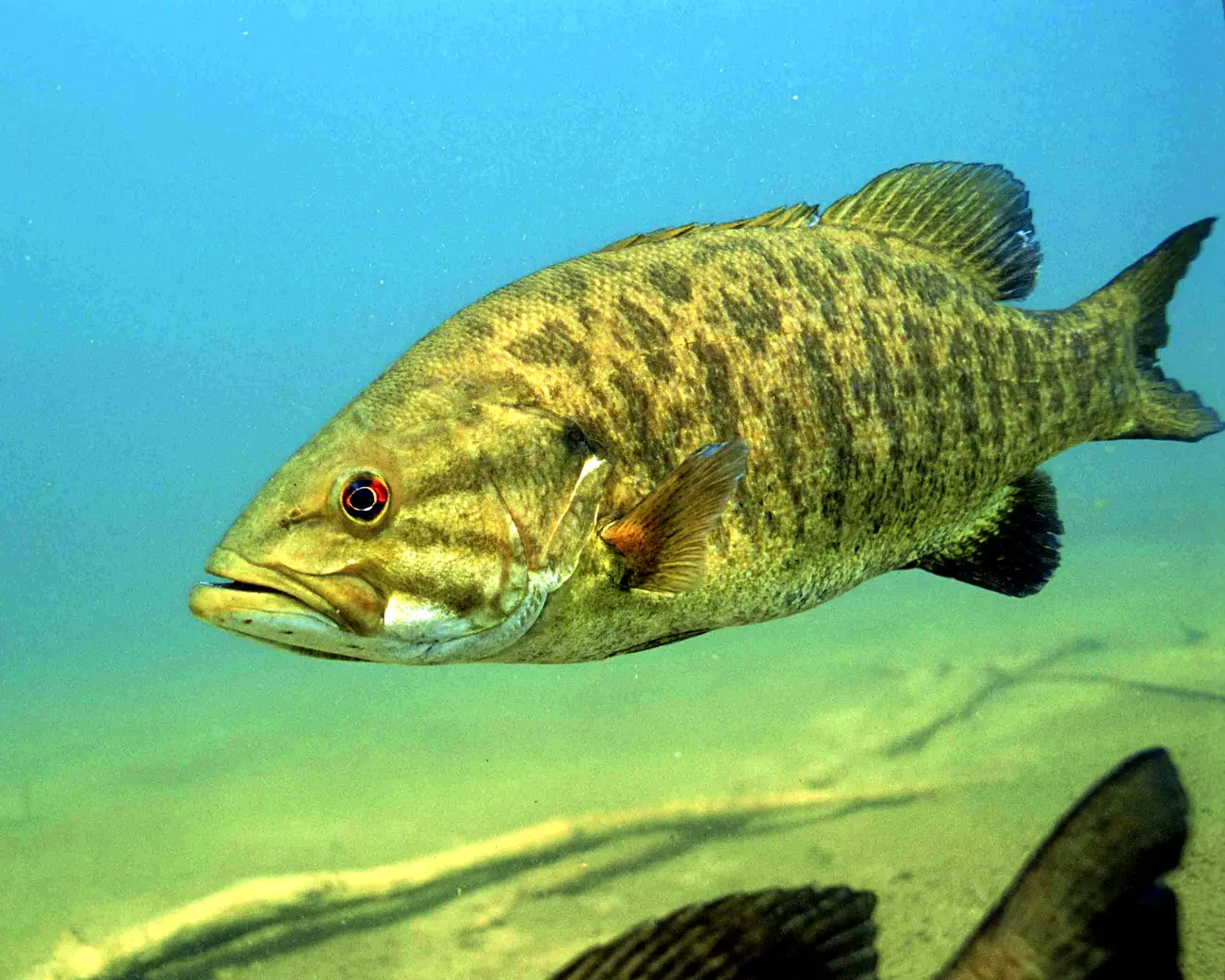
- Jaw. The upper jaw never extends beyond the eye; on many fish it ends clearly short of it.
- Flank. Dark vertical bands run down the side instead of one horizontal stripe.
- Dorsal fin. A single fin carrying 13–15 soft rays, without the near-split look of a largemouth.
- Colour. Green to bronze above, paler below; light and water clarity change how strong the bands look.
Checking it with the fish in your hand
Close the mouth first — an open jaw hides where it actually ends. Hold the fish side-on at eye level, lay a finger along the jaw line, and see whether the tip passes the eye. Then turn the fish slightly to read the flank: one stripe or a set of bars. The dorsal fin is the tie-breaker if the light is poor.
Photograph it so the answer is visible
The jaw test only survives a photo if the mouth and the eye are both readable in the same frame.
- Mouth closed, side-on. Head and tail in frame, camera level with the fish, not looking down at it.
- The eye and jaw tip both sharp. If the jaw tip blurs into the cheek, the landmark is gone.
- Flank lit evenly. A hard shadow across the side can turn a stripe into a bar.
- Dorsal fin up. A folded dorsal fin hides the spine and soft-ray split.
- A second frame of the head. A close-up of the jaw against the eye is worth carrying alongside the full-body shot.
Where AI helps, and where it stops
Catchdex returns three candidates with a confidence level and the traits behind each one, so you compare rather than accept the first answer. On bass that is useful: jaw length and flank pattern are both visible traits, and the app shows which one it leaned on.
Treat the suggestion as a starting point. Confirm the fish yourself, and check current rules with the state agency that manages the water before you keep anything — seasons, limits and gear rules differ by water and change.
Identify your next catch
Photograph the fish, compare the leading candidates, and keep the ones you confirm in your own field guide.
Download for iPhoneSources
- Texas Parks & Wildlife Department — Largemouth Bass (Micropterus salmoides) (jaw past the eye, horizontal stripe, dorsal fin counts).
- Texas Parks & Wildlife Department — Smallmouth Bass (Micropterus dolomieu) (jaw never past the eye, vertical bands, 13–15 soft rays).
Photographs are used under their original licences and credited in the captions; both are public domain. This page is general identification guidance, not fishing or food advice; always follow the rules published by the agency that manages the water you are on.